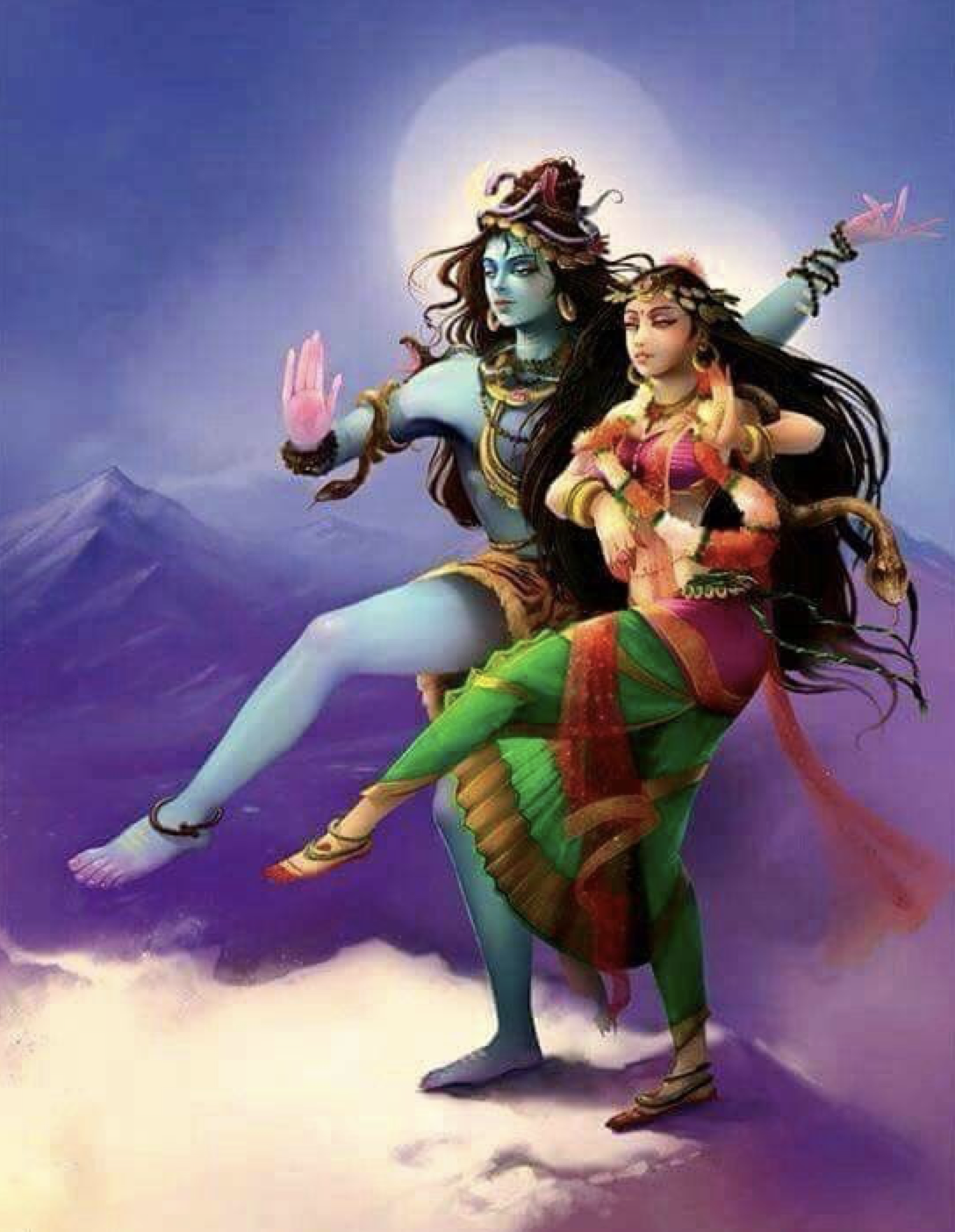
In some of the Great Traditions of cultural wisdom and spiritual practice, there are personal and spiritual practices related to intimate partnership. While some of them are clouded by what we would now consider to be horribly sexist and patriarchal beliefs and practices, some are devoted to the esoteric spiritual practices possible between partners. The idea of polarity is a big factor in some of these traditions, including Tantric sexual yoga practices, Taoist chi-strengthening routines, and modern versions of these. There are esoteric diagrams and teachings about living with intimate partners, about sexuality, contemplation and meditation, often in great detail.
The underlying notion in those traditions is that the intimate relationship can be a “cave of practice” in which two people bump up against every possible selfish pattern of behavior imaginable, see and change those patterns, and evolve with coming together as an engine of spiritual and personal evolution. There is certainly wisdom to that perspective, and many ordinary people are fortunate enough to have found forms of that nurturing, forgiving, and evolutionary process on their own. In any case, it is a legitimate form of yoga (which means union) in which we peel layers from our illusory self-sense and become more “real” in relation to everything and everyone. And if we are fortunate, in authentic communion with an intimate partner.
A modern day writer on the topic of intimate relationships was the late Dr. Sue Johnson, whose book, Hold Me Tight, is a remarkable exploration of intimate relationship with recommended practices.
Her premise is that the core of a lasting intimate relationship should, or perhaps must, be akin to that unconditional bonding that occurs between Mother and Child. It is the backstop, the depth of respect and love that is forgiving and accepting of the other. When things go wrong, she says, that unconditional love is breached, and one or both partners are deeply hurt. They each respond with characteristic patterns, what she calls a “dance.” An important part of her recommendation is to become mutually aware of those dances, vulnerably confess to them, share the pain that they have caused, notice what triggers them, and mindfully proceed to learn different dance steps.
In Sue Johnson’s view, the success and longevity of an intimate relationship depends on learning to dance together.
And that is certainly a form of yoga.